Select Language

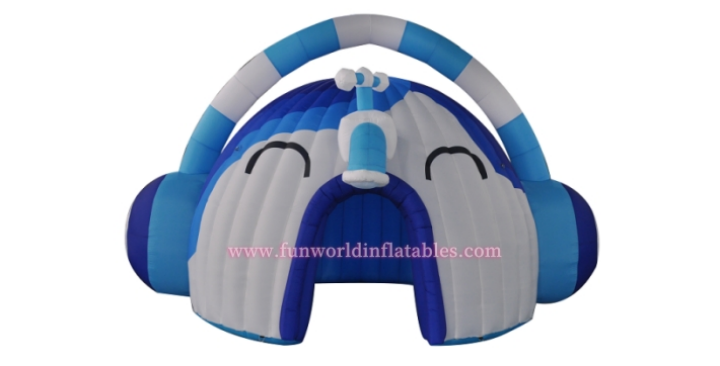
Inflatable tents, a specialized category of tents, are designed for moisture-proof, waterproof, wind-resistant, dustproof, and sun-protective applications, as well as for emergency rescue, disaster relief, short-term outdoor training, and brief field operations. These tents feature a gas-column frame structure with airbags made of high-frequency welded heat-synthetic fabric with breathable double-sided coating. The inflatable panels can be rapidly inflated to form the tent. They offer advantages such as a simple yet robust structure, excellent stability, wind resistance, UV protection, rainproof performance, and quick deployment. The tents withstand winds up to 6-8 on the Beaufort scale, operate within a temperature range of-30°C to +65°C, maintain static water pressure of ≥16 kPa, and are resistant to surface water accumulation of 230-400 mm.
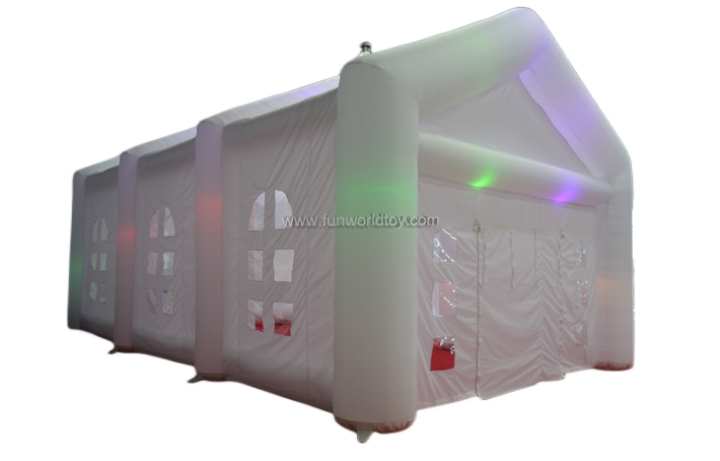
Inflatable tents are designed based on structural mechanics principles. The gas pressure expands airbags into rigid cylindrical structures that organically assemble to form the tent's framework. The load-bearing capacity is determined by the strength of the frame materials, while the durability and rigidity of the structure depend on the performance of the polymer coating. The optimal configuration of air chambers ultimately defines the maximum support capacity of the entire framework.
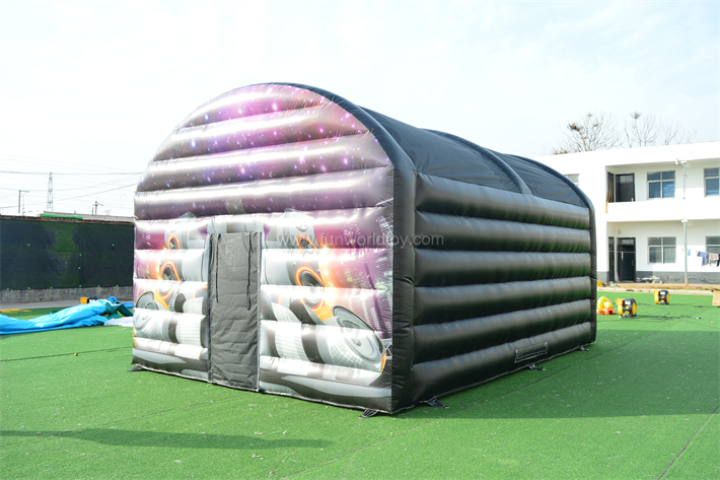
The inflatable tent is manufactured using a combination of adhesive bonding and high-frequency heat sealing. Its air columns are made of PVC double-coated fabric, while the tent fabric is waterproof and UV-resistant. This design offers rapid assembly, high strength, and features such as flame resistance, mold resistance, UV protection, and moisture resistance. As an inflatable structure, the tent frame is lightweight and compact, making it easy to fold and transport. Unlike traditional metal-frame tents, the inflatable design allows for flexible folding after deflation, reducing its size to a minimal volume. This makes it easy to fit into compact vehicles or transport vehicles, ensuring convenient transportation.

Previous: What should you do if your inflatable castle gets wet?
Next: The Difference Between Inflatable Tent and Ordinary Tent